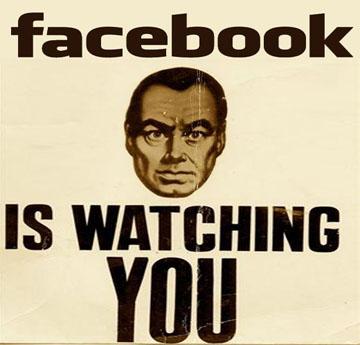
The National Security Police State and Surveillance Society Makes Everyone Less Secure

This is a truism.  The attempt to make law enforcement's job easier makes everyone less secure. For example, requiring government sponsored back doors in your favorite operating system or router or cell phone, in order, say, to facilitate court ordered wiretapping, makes all such device vulnerable to anyone and everyone who has any interest or desire in compromising those devices for their own purposes.  A report from the Guardian exposes how "cyber-crime" laws are now actually criminalizing the work of security researchers!  Excerpt:
Some of the world’s best-known security researchers claim to have been threatened with indictment over their efforts to find vulnerabilities in internet infrastructure, amid fears American computer hacking laws are perversely making the web less safe to surf.

Many in the security industry have expressed grave concerns around the application of the US Computer Fraud and Abuse Act (CFAA), complaining law enforcement and lawyers have wielded it aggressively at anyone looking for vulnerabilities in the internet, criminalising work that’s largely benign.
They have also argued the law carries overly severe punishments, is too vague and does not consider context, only the action.
HD Moore, creator of the ethical hacking tool Metasploit and chief research officer of security consultancy Rapid7, told the Guardian he had been warned by US law enforcement last year over a scanning project called Critical.IO, which he started in 2012. The initiative sought to find widespread vulnerabilities using automated computer programs to uncover the weaknesses across the entire internet.

Facebook: A Company That Really Listens to Its Users

Many would probably like to believe it's good that more and more companies are listening to their users. But this is probably not what they had in mind. From the International Business Times:
On the same day that Facebook touted sweeping new efforts to protect users’ privacy, the company confirmed that it plans to save data captured by smartphone microphones, potentially enabling the social media giant to listen in on private conversations.  
In a press release issued Wednesday, Facebook announced a forthcoming app update in which a new feature uses the phone's microphone to capture sounds in the user's environment, then identifies the song, movie or television show the user is watching based on what it hears. Once the sound is ID'd, users have the option to share it as a visual component of their posts.
Though Facebook assured that "no sound is stored,” the company acknowledged to International Business Times that it does intend to archive the data gleaned.

Even the Corporate Media Are Coming Out Against the Comcast Merger

The New York Times editorial board has come out against the proposed Comcast/TimeWarner merger.  There are far too few companies with far too much power over the local, state and national media to which the people of this country are exposed.  It is time to bring real competition to the media markets, rather than continuing to allow well-connected corporations to hold the American public hostage to their narrow, self-serving political agendas. From the NYT:
There are good reasons the Justice Department and the Federal acquisition of Time Warner Cable. The merger will concentrate too much market power in the hands of one company, creating a telecommunications colossus the likes of which the country has not seen since 1984 when the government forced the breakup of the original AT&T telephone monopoly.
Communications Commission should block Comcast’s $45 billion
The combined company would provide cable-TV service to nearly 30 percent of American homes and high-speed Internet service to nearly 40 percent. Even without this merger and the proposed AT&T-DirecTV deal, the telecommunications industry has limited competition, especially in the critical market for high-speed Internet service, or broadband, where consumer choice usually means picking between the local cable or phone company.
By buying Time Warner Cable, Comcast would become a gatekeeper over what consumers watch, read and listen to. The company would have more power to compel Internet content companies like Netflix and Google, which owns YouTube, to pay Comcast for better access to its broadband network. Netflix, a dominant player in video streaming, has already signed such an agreement with the company. This could put start-ups and smaller companies without deep pockets at a competitive disadvantage.
There are also worries that a bigger Comcast would have more power to refuse to carry channels that compete with programming owned by NBC Universal, which it owns. Comcast executives say that they would not favor content the company controls at the expense of other media businesses . . .

Twitter Partners with Pakistani Speech Police

From the New York Times:
At least five times this month, a Pakistani bureaucrat who works from a colonial-era barracks in Karachi, just down the street from the former home of his country’s secularist founder, Mohammed Ali Jinnah, asked Twitter to shield his compatriots from exposure to accounts, tweets or searches of the social network that he described as “blasphemous” or “unethical.”
All five of those requests were honored by the company, meaning that Twitter users in Pakistan can no longer see the content that so disturbed the bureaucrat, Abdul Batin of the Pakistan Telecommunications Authority . . .

Congress Pretends to Curb Illegal and Unconstitutional Wiretapping Program

The Democratic and Republican parties are among the greatest threats to the people and Constitution of the United States.  From Wired:

The U.S. House of Representatives has passed a bill that would end the NSA’s mass collection of Americans’ phone records. Unfortunately, it may not end the NSA’s mass collection of Americans’ phone records.
The House voted 303 to 121 Thursday in favor of the USA Freedom Act, broad legislation aimed at reforming the NSA’s surveillance powers exposed by Edward Snowden. The central provision of the bill, which now moves on to debate in the Senate, is intended to limit what the intelligence community calls “bulk” collection–the indiscriminate vacuuming of citizen’s phone and internet records. But privacy advocates and civil libertarians say last-minute changes to the legislation supported by the White House added ambiguous language that could essentially give the NSA a broad loophole through which it can continue its massive domestic data collection.

Survey: Comcast, Time Warner the Most Hated Companies in the United States

From BGR:
The only consumer survey that matters has found that among all businesses across every industry, Comcast and Time Warner Cable are the two most hated companies in America. The American Customer Satisfaction Index, which is put out quarterly by the University of Michigan’s Ross School of Business and is considered the most comprehensive customer satisfaction survey in the United States, has just come out with a new survey showing once again that Comcast and TWC have the lowest customer satisfaction ratings of any ISPs in the United States. And that’s not even the worst news for the two companies in the latest survey.

We asked ACSI to provide us with customer satisfaction scores for every company in every industry that they cover and it turns out that Comcast and TWC have the lowest customer satisfaction ratings of any of them.
In fact, Comcast and TWC’s Internet service businesses were the only two businesses in the United States to score below a 60 on the ACSI’s 100-point scale. What’s most amazing is that both Comcast and TWC have even lower customer satisfaction ratings than United Airlines, which has a notoriously bad reputation in an industry that, due in part to government security requirements, is known for delivering a miserable experience.

The Criminal Justice System Is Aptly Named

Because it is indeed criminal.  From the Guardian, an op-ed by Ladar Levison, who chose to shut down his secure encrypted email service rather than bend over for the feds. Excerpt:
The largest technological question we raised in our appeal (which the courts refused to consider) was what constitutes a "search", i.e., whether law enforcement can demand the encryption keys of a business and use those keys to inspect the private communications of every customer, even when the court has only authorized them to access information belonging to specific targets.

The problem here is technological: until any communication has been decrypted and the contents parsed, it is currently impossible for a surveillance device to determine which network connections belong to any given suspect. The government argued that, since the "inspection" of the data was to be carried out by a machine, they were exempt from the normal search-and-seizure protections of the Fourth Amendment.

More importantly for my case, the prosecution also argued that my users had no expectation of privacy, even though the service I provided – encryption – is designed for users' privacy.

If my experience serves any purpose, it is to illustrate what most already know: courts must not be allowed to consider matters of great importance under the shroud of secrecy, lest we find ourselves summarily deprived of meaningful due process. If we allow our government to continue operating in secret, it is only a matter of time before you or a loved one find yourself in a position like I did – standing in a secret courtroom, alone, and without any of the meaningful protections that were always supposed to be the people's defense against an abuse of the state's power.